THIN FILM NITI-X MANUFACTURING
Precision NiTi & NiTi-X Thin Films for Integrated Microscale Systems
Khanjur manufactures high-performance NiTi and NiTi-X thin film shape memory alloys using proprietary physical vapor deposition (PVD) processes engineered for precise control of composition, thickness, microstructure, and phase transformation behavior.
Our platform enables functional materials to be embedded directly within device stacks rather than assembled as bulk components, supporting advanced MEMS, NEMS, semiconductor, medical, aerospace, and flexible hybrid electronic systems.
- Thin films on a substrate for interfacial engineering and multilayer device integration
- Freestanding thin films for complex 3D shape-set and trained microstructures.
Alloy Engineering & Transformation Control
Shape memory performance begins with composition and microstructure control.
Alloying Capabilities
- TiNiCu (reduced hysteresis, improved cyclic durability)
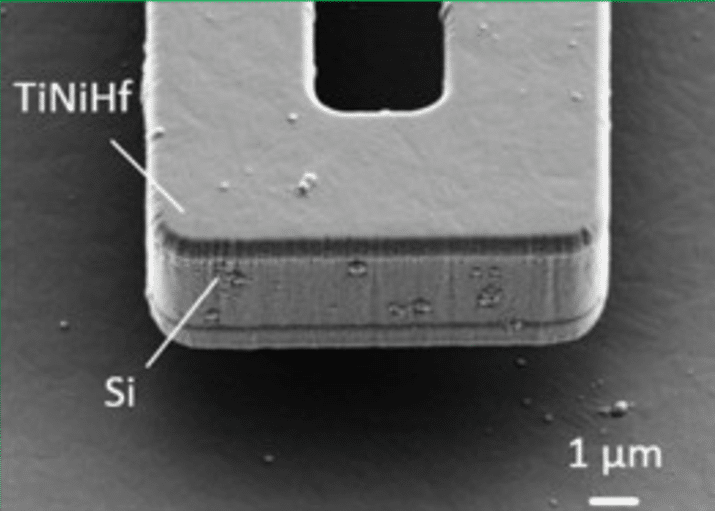
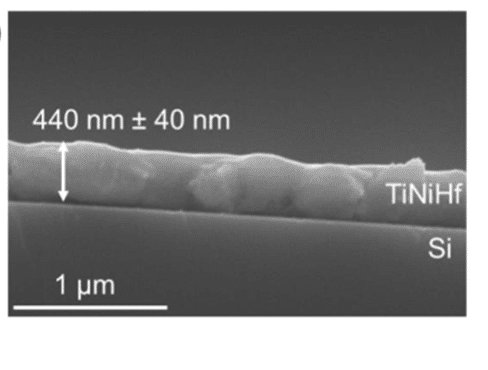
- TiNiHf (elevated transformation temperatures)
- TiNiCo and TiNiCr variants
- Custom multi-element NiTi-X systems
- Controlled compositional gradients
- Multilayer alloy stack design
Transformation & Functional Control
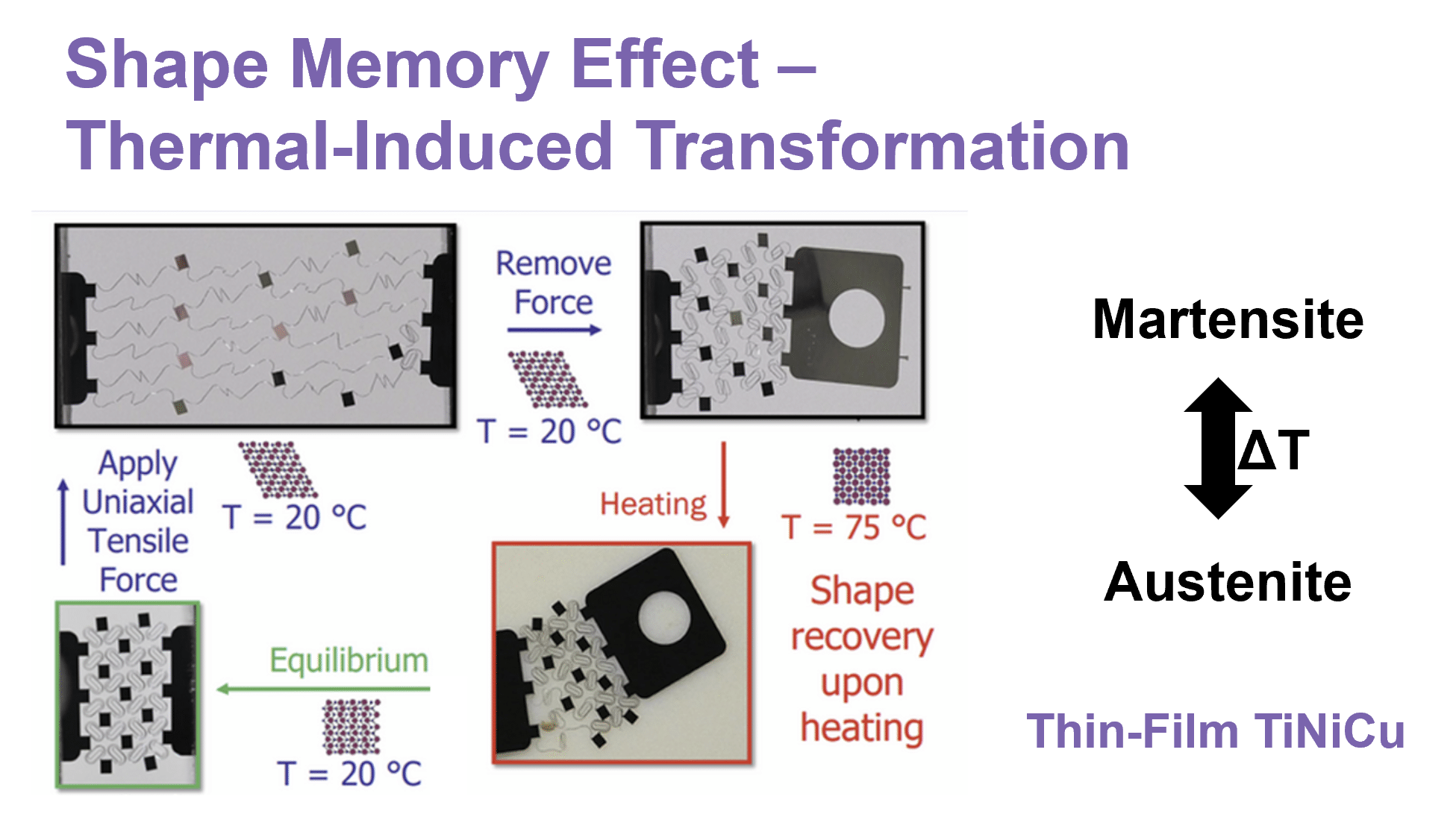
- Tunable martensite ↔ austenite phase transformation
- Adjustable austenite start/finish (As/Af) temperatures
- Engineered hysteresis width
- Fatigue-optimized microstructures
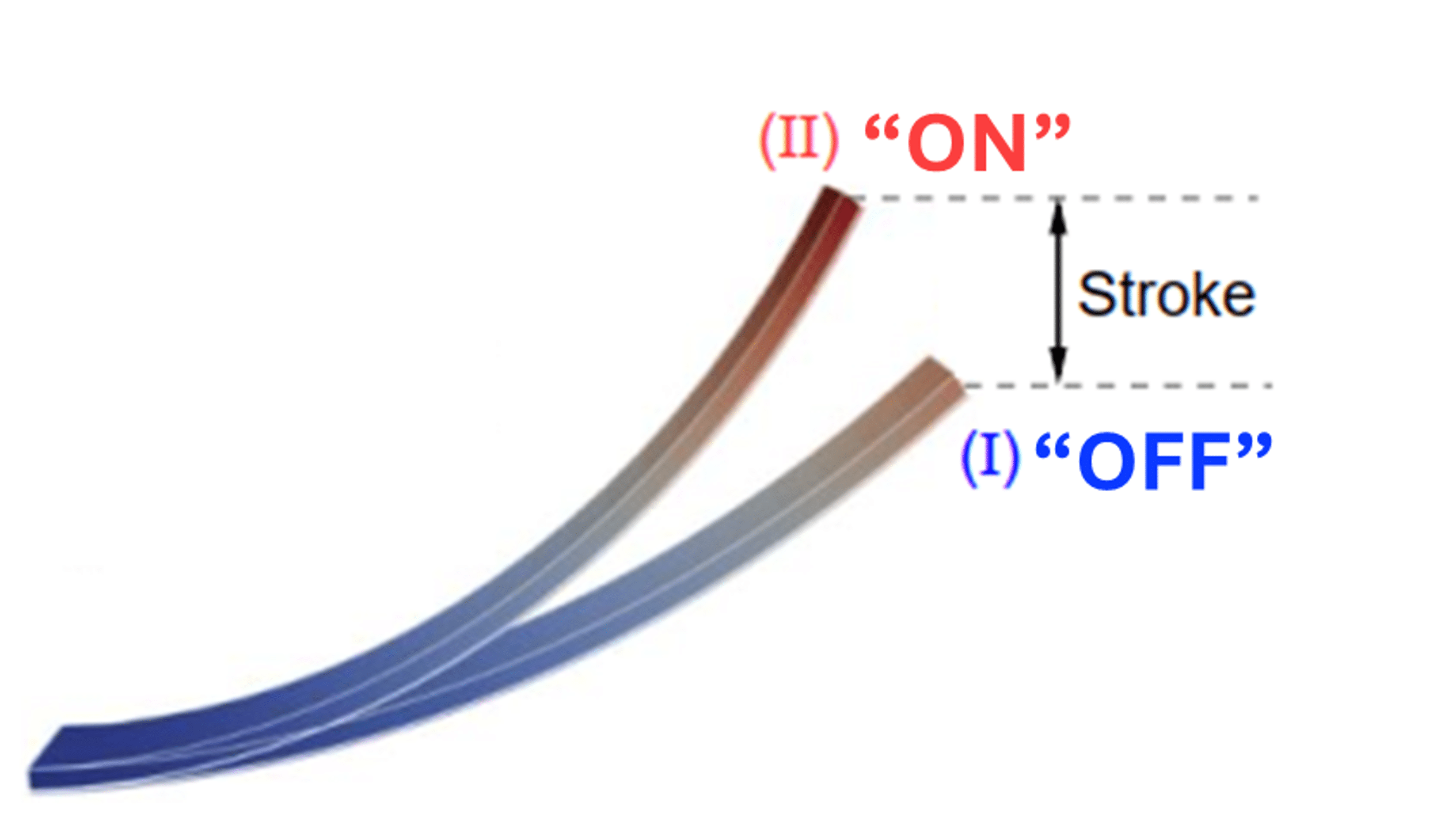
- Targeted actuation strain and recovery force
- Stable superelastic behavior
Microstructural Engineering
- Controlled as-deposited metastable structure
- Post-deposition crystallization and phase stabilization
- Thickness and compositional uniformity across wafer-scale substrates
- Engineered grain structure and phase distribution
- High strength and smooth elastic response
- Corrosion-resistant NiTi-based thin films
Thin Film on a Substrate – Interfacial Engineering & Device-Level Integration
Purpose-built for multilayer stack compatibility and semiconductor-adjacent workflows.
- Thickness range: 200 nm – 10 µm
- Compatible substrates: silicon, SiC, metals, glass, ceramics, polymers, piezoelectrics
- Engineered adhesion layers for dissimilar materials
- Diffusion barriers to mitigate interdiffusion
- Multilayer stack architectures
- Thermal expansion compatibility optimization
- Mechanical stress management within stacks
- Semiconductor-compatible fabrication workflows
- Integration into advanced packaging architectures
Freestanding Thin Films – Shape-Set 3D Architectures & Trained Functional Devices
Designed for flexible, released, and trained microstructures that retain programmed shapes.
- Thickness range: 5 µm – 80 µm
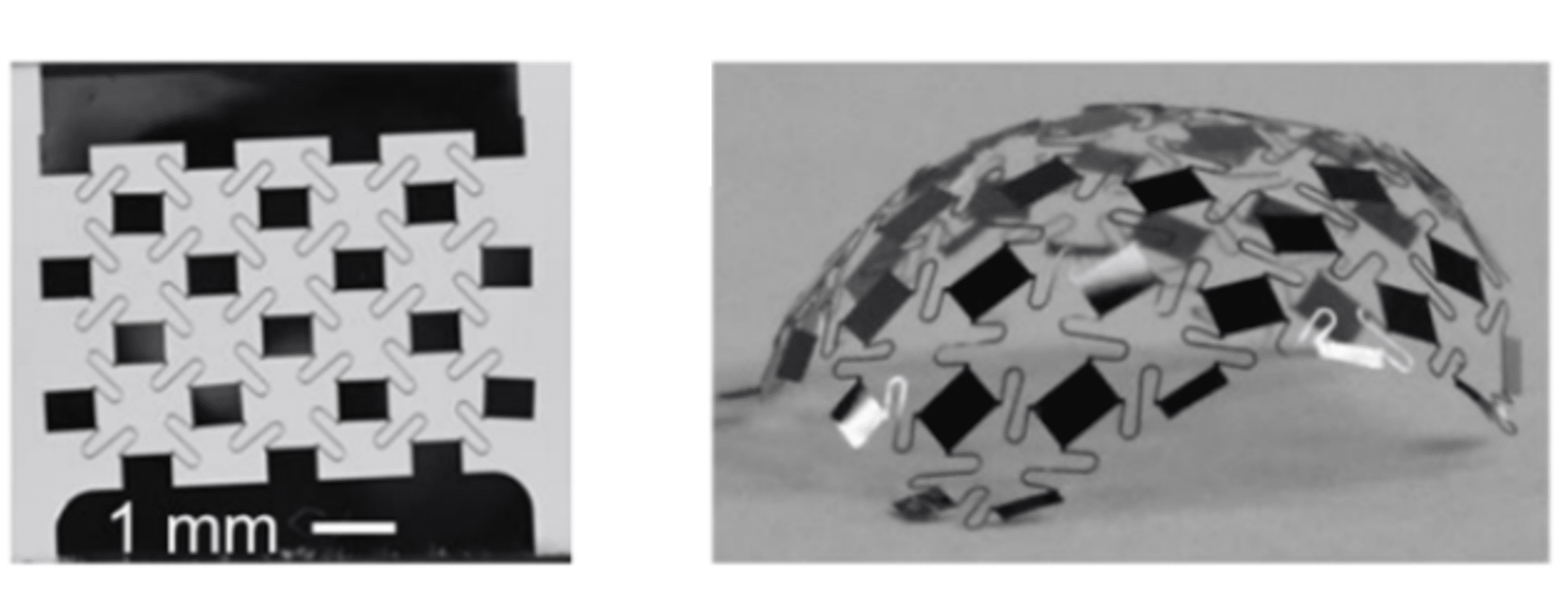
- Patterned flat, released, and thermally shape-set into complex 3D geometries
- Trained to remember programmed functional shapes
- Flattened again for secondary integration or lamination
- Multi-axis deformation profiles
- Reversible actuation structures
- Configurable shape, size, and geometric architectures
- Used in minimally invasive devices such as stents
- Integrated into 3D microactuators and flexible hybrid electronics
Fabrication & Post-Processing Compatibility
- Photolithography
- Precision laser cutting and structuring
- Dielectric deposition
- Functional electrode metals
- Piezoelectric coatings
- Hybrid additive-subtractive workflows
- Lamination into flexible hybrid electronic stacks
Functional Performance Domains
- Microactuators and micro-positioning systems
- Superelastic adaptive electronics
- Elastocaloric cooling systems
- Solid-state thermal management
- Precision sensing platforms
- Mechanical damping and vibration attenuation
- Energy absorption through phase transformation
- Conformal semiconductor interfaces
- Advanced aerospace and defense micro-systems
Manufacturing & Scalability
- Early-stage feasibility studies
- Single-wafer prototyping
- Batch PVD processing for pilot-scale production
- Process frameworks adaptable to higher-volume manufacturing
- Compositionally consistent scaling strategies
Why It Matters
Thin-film shape memory alloys enable compact, adaptive, and multifunctional microscale systems that cannot be achieved using bulk materials alone.
By engineering alloy composition, microstructure, interfaces, and trained geometries at the thin-film level, Khanjur delivers programmable functional materials that integrate directly into next-generation medical, semiconductor, aerospace, and flexible hybrid electronic architectures.